· 2 min read
Vulnerability makes you a better leader
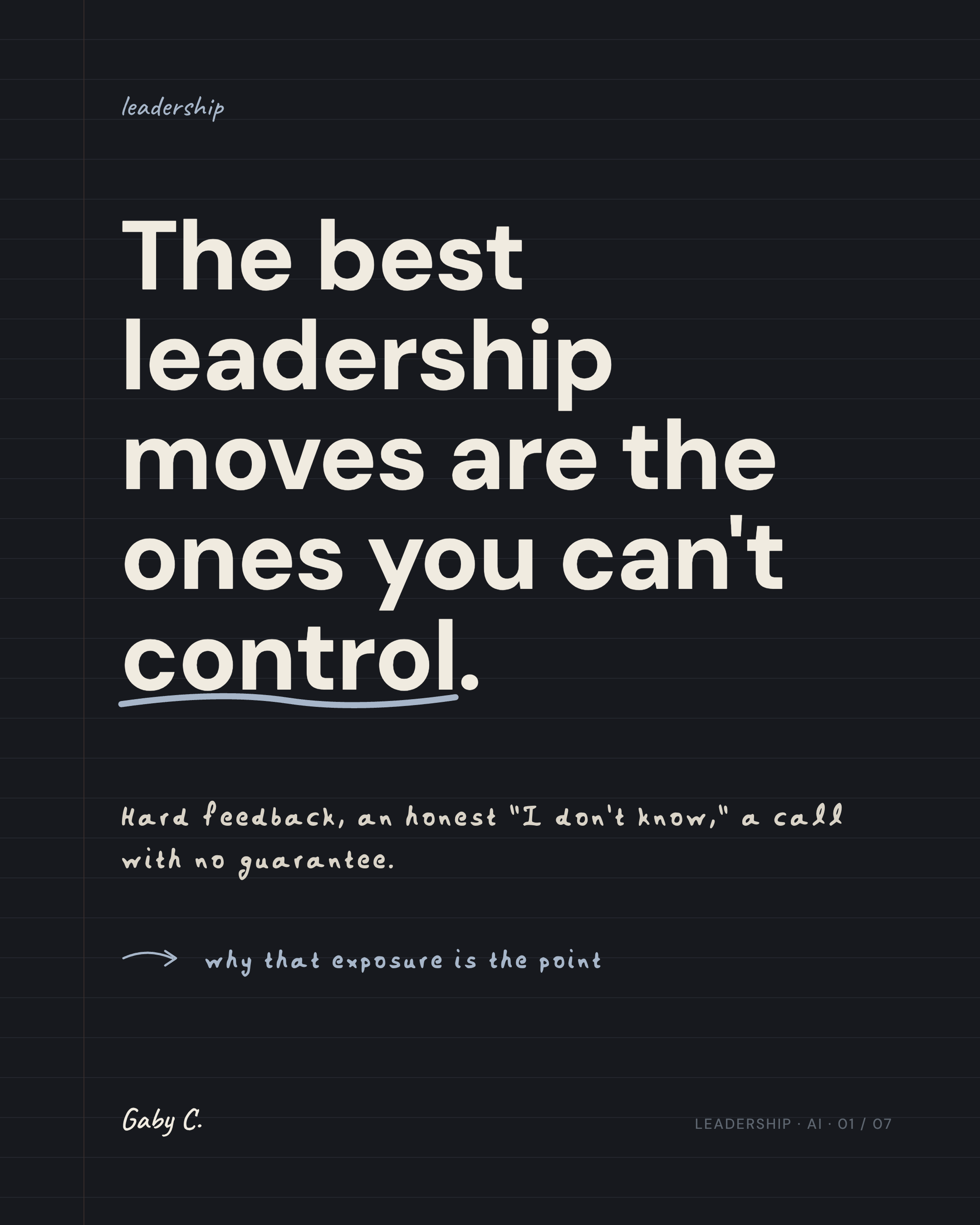
The hard things that make you a better leader all share one feature: you cannot control how they go. Give someone honest feedback and it might strain the relationship. Admit you were wrong and it might cost you standing. Back the unpopular call and it might fail out loud. That exposure to an uncertain, risky outcome is the whole reason those acts take courage, and it is what makes you better at the job.
Brené Brown has a name for that exposure: vulnerability. In Dare to Lead, she argues it is the raw material every brave act is built from. Take the risk and uncertainty out of a decision, and it stops asking anything of you.
What that willingness buys you
The willingness to be exposed is what makes each of those acts work. Sit in the discomfort and you have the hard conversation, so the problem gets solved while it is still small. Say “I don’t know, help me think about this,” and the bad news reaches you early instead of landing as a surprise. Stay curious instead of defending your position, and you keep learning after everyone else has stopped.
When you go first, people follow you into it. When you protect yourself, they protect themselves too. It starts with whoever is in charge.
Courage and vulnerability are the same thing
The usual objection is that being this exposed is weakness. Brown’s research points the other way. She asked people to name the bravest things they had done, and separately the most vulnerable, and the two lists were the same. Courage and vulnerability turn out to be one experience, felt from the inside. So when you say you want to be a more courageous leader, more honest, more accountable, what you are choosing is to be exposed more often, on purpose.
I felt this a couple of months ago. I was in a meeting talking through a process I had not figured out yet, and I was uncomfortable the whole time. I know why. I tie being smart to walking in with the steps already worked out and handed to my team, so sitting there without them felt like proof I was failing at the job. The honest move was to say I had not cracked it yet and work it out in the open. Everything in me wanted to perform certainty instead.
That pull to look like you have it handled shows up right where the work needs you most. When you feel it, you have probably found the thing worth doing, the conversation you keep rescheduling or the meeting where you will not have every step. The discomfort is the sign it matters. Walk in anyway.